When You're Too Close to the Business to See What's Coming Next
How the CEO of a National Staffing Leader Uses an Outside Advisor to Stay Accountable to the Future
Client: Express Employment Professionals
Industry: Staffing & Workforce Solutions
Engagement: Strategic Planning, Executive Advisory & Leadership Facilitation
The Company
Express Employment Professionals is one of the largest staffing companies in North America, helping businesses find talent and people find work across virtually every industry. It's a legacy brand with deep roots, built by founders whose instincts and drive shaped the company's identity for decades.
When Bob Funk Jr. stepped into the CEO role, he inherited a business with enormous momentum. But he also inherited a rapidly shifting labor market that wouldn't wait for a five-year strategic plan to catch up.
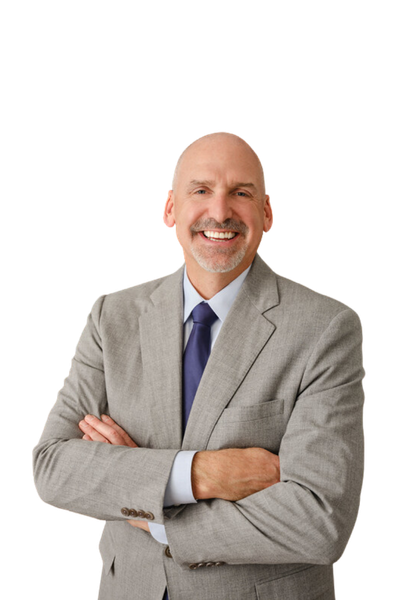
Bob Funk Jr., CEO
The Problem
The staffing industry doesn't sit still. Labor markets are being reshaped by technological disruption, AI augmentation, shifts in workforce credentialing, and changing expectations from both employers and workers. For most businesses, a strategic plan can be a relatively stable document that gets refreshed on a predictable cycle. For Express, that approach had become a liability.
Bob saw the problem clearly.
The executive environment had habits and assumptions baked in by years of success, or what he calls "the cultures and traditions that made us who we are." That history was an asset in many ways, but it also created blind spots. Leaders were anchored to horizon-one thinking, focused on the day-to-day operations right in front of them, and struggled to lift their gaze to what was coming in horizons two and three.
And when Bob moved from corporate development into the president's role and then the CEO seat, his own bandwidth shifted. The job demanded more operational attention, which left less time to hold the organization accountable to the longer-term vision he knew they needed.
He needed someone who understood the business deeply but wasn't captive to its assumptions. Someone who could challenge the room, including him, and keep everyone honest about where the future was actually heading.

The Decision
Rick Thomas at First Generations Advisors had already been working with Express before Bob took the CEO role. Bob had experienced Rick's value firsthand during the company's strategic planning work. Rick didn't show up as a passive facilitator. He reshaped how Express thought about planning itself.
Rick had pushed the leadership team to accept an uncomfortable truth: their strategic plan couldn't remain static. It had to be constantly iterative. In a room full of experienced executives who were accustomed to a more traditional cadence, that took courage.
"It was bold, having that conversation with the individuals at the table who couldn't think that way. That takes a lot of courage in a consultancy role, to say 'you're missing this, and this is what it needs to look like.'"
When Bob stepped into the CEO chair, the question wasn't whether to keep Rick engaged. It was how to leverage him even more intentionally.
"I need someone to keep us accountable. I need you to keep us accountable, and keep me accountable, to the longer-term vision."
The Work
Rick's engagement with Express operates on two interconnected tracks.
Strategic advisory
Rick serves as both a sounding board and an accountability partner for the executive team, pressure-testing assumptions, validating directional thinking, and translating big-picture strategic ideas into tactical, executable plans. His research into how technological inflections have historically impacted the labor force gave Express a data-driven foundation for understanding the scale of the opportunity in front of them and where the dangerous misalignments in the U.S. labor market actually lie.
Bob describes Rick's turnaround on that research as a galvanizing moment: real data, delivered within 30 days, that crystallized both the threat and the opportunity
Leadership facilitation
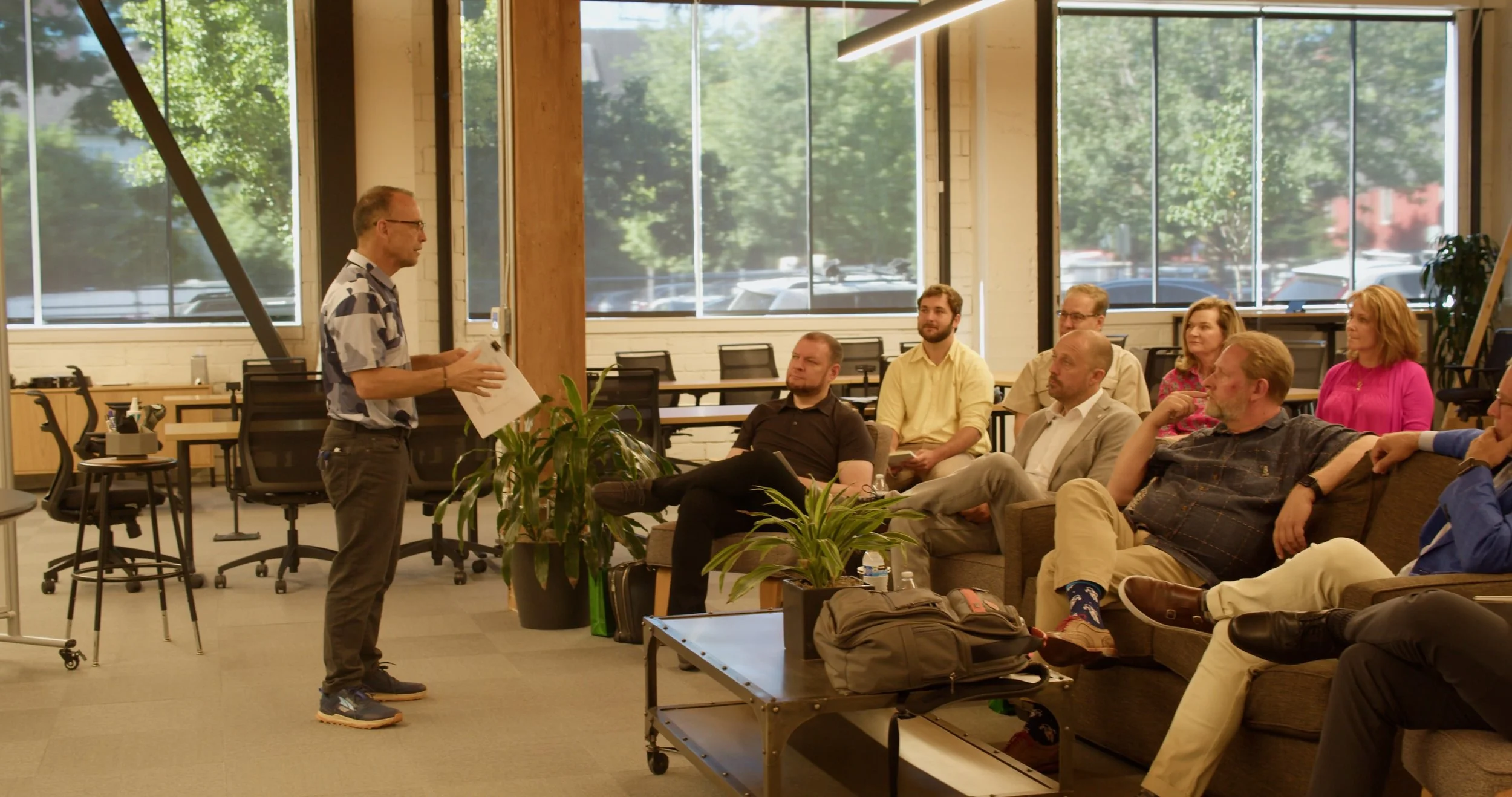
Rick also works with the broader leadership organization through retreats, special meetings, and off-site facilitation. Bob sees this work as inseparable from the strategy itself. His reasoning is direct: you can't think strategically while you're still mentally connected to today's operations. The facilitation work resets people psychologically, pulling them out of the day-to-day so they can see the full landscape.
"If you're going to talk about strategy, you have to disconnect yourself from the day-to-day. You don't have a choice. If you stay connected to that, it biases you. You can't challenge your normal assumptions and see the forest for the trees."
What makes Rick's contribution distinctive, according to Bob, is the perspective he brings as an outsider who has earned deep insider understanding. Rick knows Express, but he doesn't think like Express. He carries no allegiance to any department's history or any legacy assumption about how things have always been done.
"You're not tied to the cultures and traditions that made us who we are. You get to think differently about any given framework."
The Results
Bob points to several tangible outcomes from the engagement:
A strategic plan that actually moves. Express shifted from a traditional, static planning model to a constantly iterative approach, one that matches the velocity of the labor market.
New business vectors identified and pursued. Rick helped Express evaluate and act on strategic opportunities, including technology partnerships, blockchain applications for workforce data, and the workforce credentialing landscape, translating long-term vision into near-term tactical objectives.
Moments of breakthrough insight. Bob recalls a specific leadership meeting where Rick listened to the team debate for twenty minutes, then asked a single question that reframed the entire conversation. No one in the room had considered the angle. It changed the strategic framework they were building.
Sustained accountability. Perhaps most importantly, Rick's ongoing role ensures that the strategic work doesn't evaporate when the meeting ends. Decisions get tracked. Commitments get honored. The long-term vision stays alive even when daily operations demand the CEO's full attention.
"Your ability to communicate succinctly, directly, with honesty and transparency, and then keep us accountable after the fact, especially once a decision was made. Tremendous value."

Bob’s Advice to Other Executives
When asked what he'd tell another organization considering working with Rick, Bob's guidance is clear:
Leave your assumptions at the door. The leaders who get the most value are the ones willing to come in with a blank slate and let the process work.
Give Rick time to learn. Let him understand what you do, why you do it, and how you do it before diving into solutions. The depth of understanding is what makes the insight so sharp.
Let go of the steering wheel. The hardest thing for a founder or CEO is stepping back and trusting someone else to guide the process. But that's exactly where the value lives.
"Trust him to do the work. If you come into it as a blank slate and let him guide you through the process, you will benefit from it."
Is This You?
You've built a successful business. But the market is shifting faster than your planning cycle can keep up. Your team is strong, and yet they're so deep in the day-to-day that no one is protecting the long view. You're starting to realize that the assumptions that got you here might be the very things keeping you from what's next.
You don't need another consultant who hands you a binder and walks away. You need an advisor who will learn your business, challenge your thinking, and hold you accountable to the future you say you want.
Book a free call with Rick to explore what that looks like for your organization.
First Generations Advisors helps executives and leadership teams move beyond day-to-day thinking to build strategy that keeps pace with the markets they serve and the futures they're building toward.